
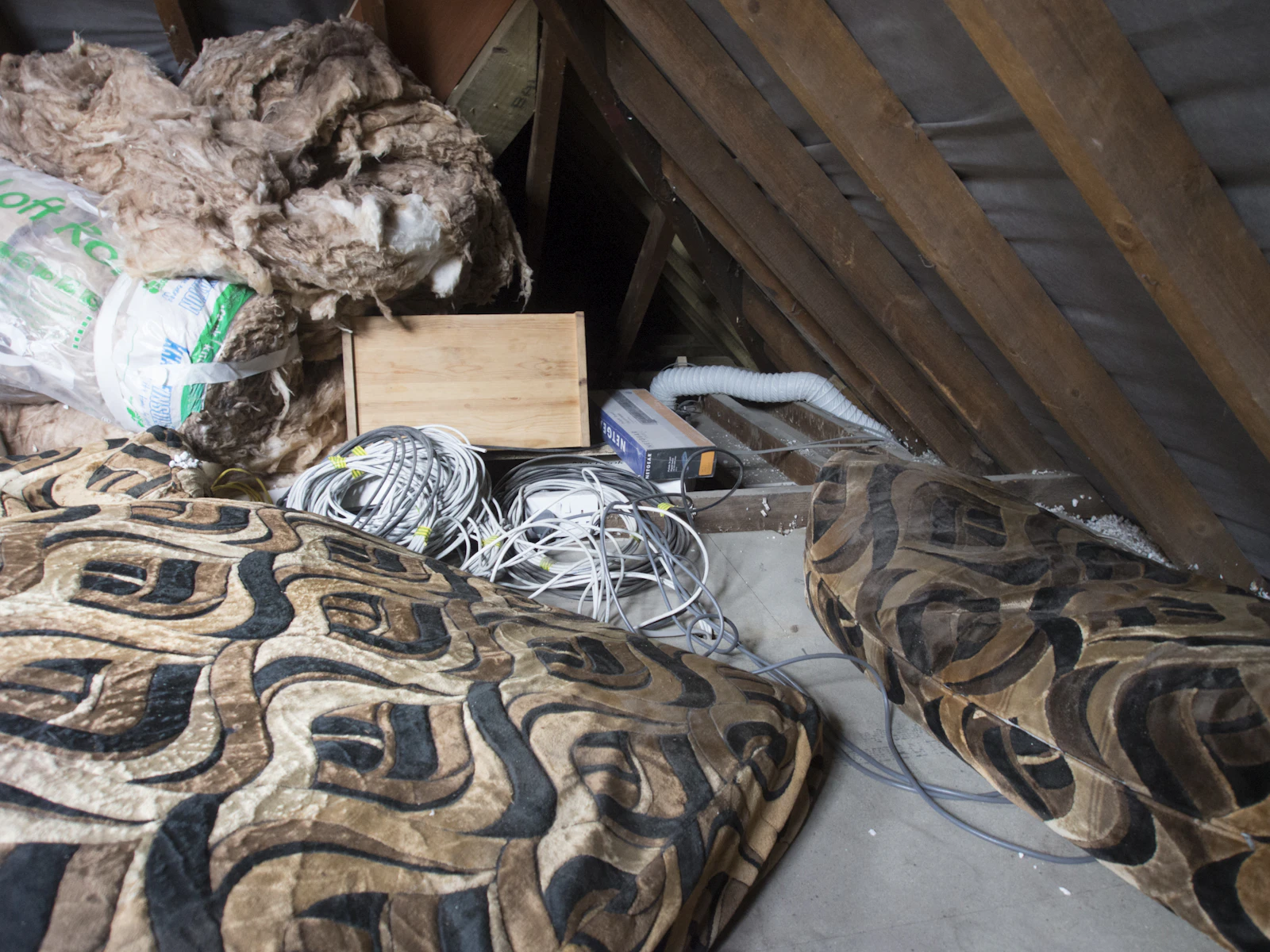
What gets blown into an attic?
Three materials get blown in: fiberglass, cellulose, and mineral (rock or slag) wool. All are installed with pneumatic equipment, usually by a professional, and work well on unfinished attic floors and around obstructions, per the Department of Energy. Fiberglass and cellulose are the most common in US attics; mineral wool is less widely used.
- Fiberglass loose-fillR-2.2-R-2.7 per inch; light, settles very little
- CelluloseR-3.2-R-3.8 per inch; recycled-content, fire-treated, settles ~13%
- Mineral woolStrong fire and moisture resistance; similar per-inch range to cellulose, less common
- InstallationAll three are blown in with pneumatic equipment, usually by a professional
- Where it's usedUnfinished attic floors and areas with obstructions - wiring, joists, pipes
- Topping upAll three can be blown over existing insulation to raise an under-insulated attic
Sources
2 cited- Blown-in material types and where each is used: U.S. Department of Energy, Insulation Fact Sheet, DOE/CE-0180, 2008 (checked 2026-08-19).
- R-value per inch for fiberglass and cellulose: U.S. Department of Energy, Building America Solution Center, Loose-Fill Insulation (checked 2026-08-19).