
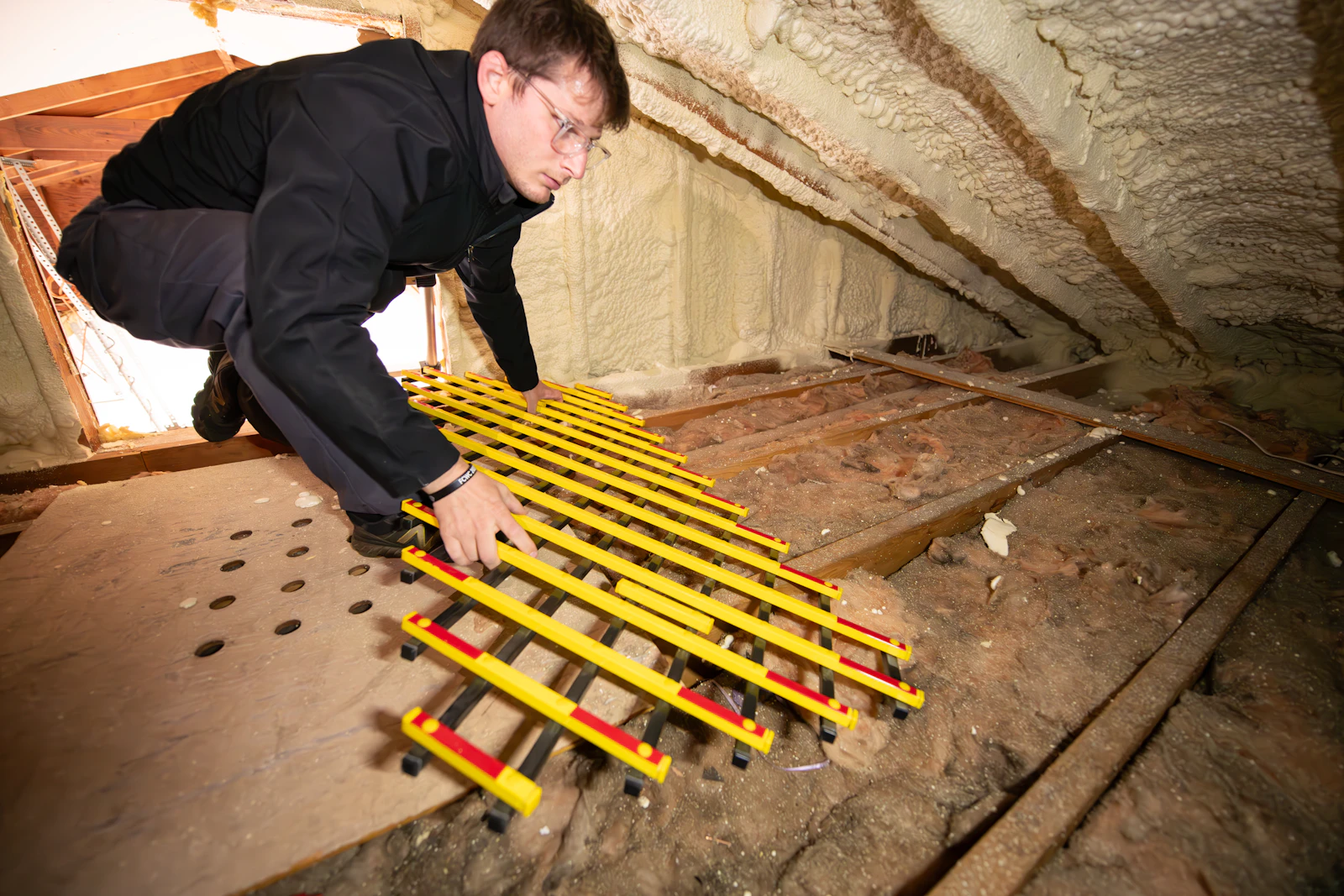
What should you look for in a blown-in insulation company?
Look for a company that is licensed in your state, carries insurance, and employs installers who are trained and certified, according to ENERGY STAR.
- Licensed and insuredInsurance is the company's coverage - not yours - that responds if a worker is hurt or your ceiling is damaged.
- Written scopeThe target R-value, material, and whether air-sealing is included, all in writing before you sign.
- Trained, certified installersENERGY STAR points to programs like Home Performance with ENERGY STAR for verified training.
Many gas and electric utilities also keep pre-screened lists of licensed, insured insulation contractors - ENERGY STAR notes this is a reliable starting point when you are looking for installers near you.
How many quotes should you get, and how do you compare them?
Get written estimates from several different contractors, ENERGY STAR advises, and compare them on cost and scope of work, not price alone. Because the FTC's R-Value Rule requires insulation R-values to be disclosed from standard tests, the most useful comparison is the installed R-value each bid delivers for the money.
A cheaper bid that stops short of the recommended R-value, or that skips air-sealing, is rarely the better deal once you account for the heating and cooling you keep paying for. Ask each company to itemize the R-value they will reach, the material, and whether air-sealing and attic-hatch insulation are included.
What certifications matter for insulation contractors?
Two are worth checking. A Building Performance Institute (BPI) certification is earned by passing a proctored, standards-based exam and kept current through renewal, so it signals verified building-science competence. ENERGY STAR also points homeowners to programs with contractor training requirements, such as Home Performance with ENERGY STAR. These credentials do not guarantee anything on their own, but they tell you the company has been measured against a recognized standard rather than self-describing as an "expert."
What should you verify before you sign a contract?
Before signing, confirm five things in writing: the company's state license and insurance, the installers' certifications, the target R-value the job will reach, whether air-sealing is included, and the total price and scope.
| What to verify | What it tells you | Source |
|---|---|---|
| State license + proof of insurance | The company can legally work in your state, and its policy covers injury or damage during the job | ENERGY STAR |
| BPI certification | The installer passed a proctored, standards-based building-science exam | Building Performance Institute |
| Home Performance with ENERGY STAR (or similar) | The company works through a program with training and certification requirements | ENERGY STAR |
| A home energy assessment first | A certified assessor's blower-door and infrared testing sets the R-value target each bid should meet | U.S. Department of Energy |
| Written R-value documentation | The FTC's R-Value Rule requires R-value disclosure from standard tests | FTC / ENERGY STAR |
What are the red flags when choosing a company?
Walk away from pressure. The FTC lists demands for an on-the-spot decision, and requests to pay the whole job up front or in cash, as classic home-improvement scam signs. ENERGY STAR adds a niche-specific one: if a contractor won't air-seal the attic before insulating, call someone else. Other warning signs: no verifiable state license or proof of insurance, no written scope, and no willingness to commit to a target R-value. See [questions to ask an insulation contractor](/guides/insulation-contractor-questions/) for the full checklist.
Related questions
Sources
6 cited- Contractor licensing, insurance and training guidance: ENERGY STAR, How to Hire an Attic Insulation Contractor, 2024 (checked 2026-08-19).
- Home energy assessment as the recommended first step: U.S. Department of Energy, Consumer Guide to Home Energy Assessments, DOE/EE-2477, 2021 (checked 2026-08-19).
- R-Value Rule disclosure requirement: Federal Trade Commission, Final Amendments to the R-Value Rule for Home Insulation, 2018 (checked 2026-08-19).
- BPI certification standard: Building Performance Institute, Certified Professionals, 2026 (checked 2026-08-19).
- Removal warranted for moldy, porous material: U.S. EPA, A Brief Guide to Mold, Moisture, and Your Home, EPA 402-K-02-003, 2012 (checked 2026-08-19).
- Home-improvement fraud red flags: Federal Trade Commission, Spot and Avoid Home-Related Fraud, 2022 (checked 2026-08-19).