
Blown-in fiberglass vs cellulose: which insulates better?
Per inch, cellulose wins on paper. The U.S. Department of Energy lists loose-fill cellulose at about R-3.2 to R-3.8 per inch and loose-fill fiberglass at R-2.2 to R-2.7 - so cellulose reaches a target R-value in less depth. Fiberglass is lighter, resists moisture better, and settles less, which is why "better" depends on your priorities.
Both are loose-fill materials blown into place with pneumatic equipment. Cellulose is denser and made mostly from recycled paper treated for fire resistance. On price, the two are close: blown-in fiberglass runs $0.50 to $1.10 per square foot and cellulose $0.60 to $1.80, with a typical whole-project range of $986 to $2,333 (HomeAdvisor, 2025). For the full settling comparison, see [blown-in cellulose vs fiberglass](/guides/blown-in-cellulose-vs-fiberglass/).
Does cellulose settling change the comparison?
Yes, a little. Cellulose settles after installation, so its final depth is less than the day it was blown in. GreenBuildingAdvisor notes that about 13% settling is normal for a proper install, and installers compensate by blowing it in deeper than the target - aiming for 17 inches of settled thickness means installing roughly 20 inches. This is a known, manageable quantity, not a defect: manufacturers print the settled depth needed for each R-value on the bag. Loose-fill fiberglass settles far less, so its installed depth stays closer to its rated depth.
Blown-in vs batt insulation: what's the difference?
Blown-in is loose fibers packed in by machine; batts are pre-cut blankets laid between joists or studs. The Department of Energy notes blown-in fills irregular areas and gaps around obstructions, while batts must be hand-cut to fit. In an existing attic floor, blown-in usually gives more consistent coverage with fewer gaps.
Standard fiberglass batts run about R-3.1 to R-4.3 per inch, and a homeowner can install them - but the DOE warns that gaps and compression lower the real R-value. Batts shine in open new-construction walls and accessible joist bays; blown-in tends to win on an existing, obstruction-filled attic floor. See the full [blown-in vs batt](/guides/blown-in-vs-batt-insulation/) comparison.
Spray foam vs blown-in: is foam worth the extra cost?
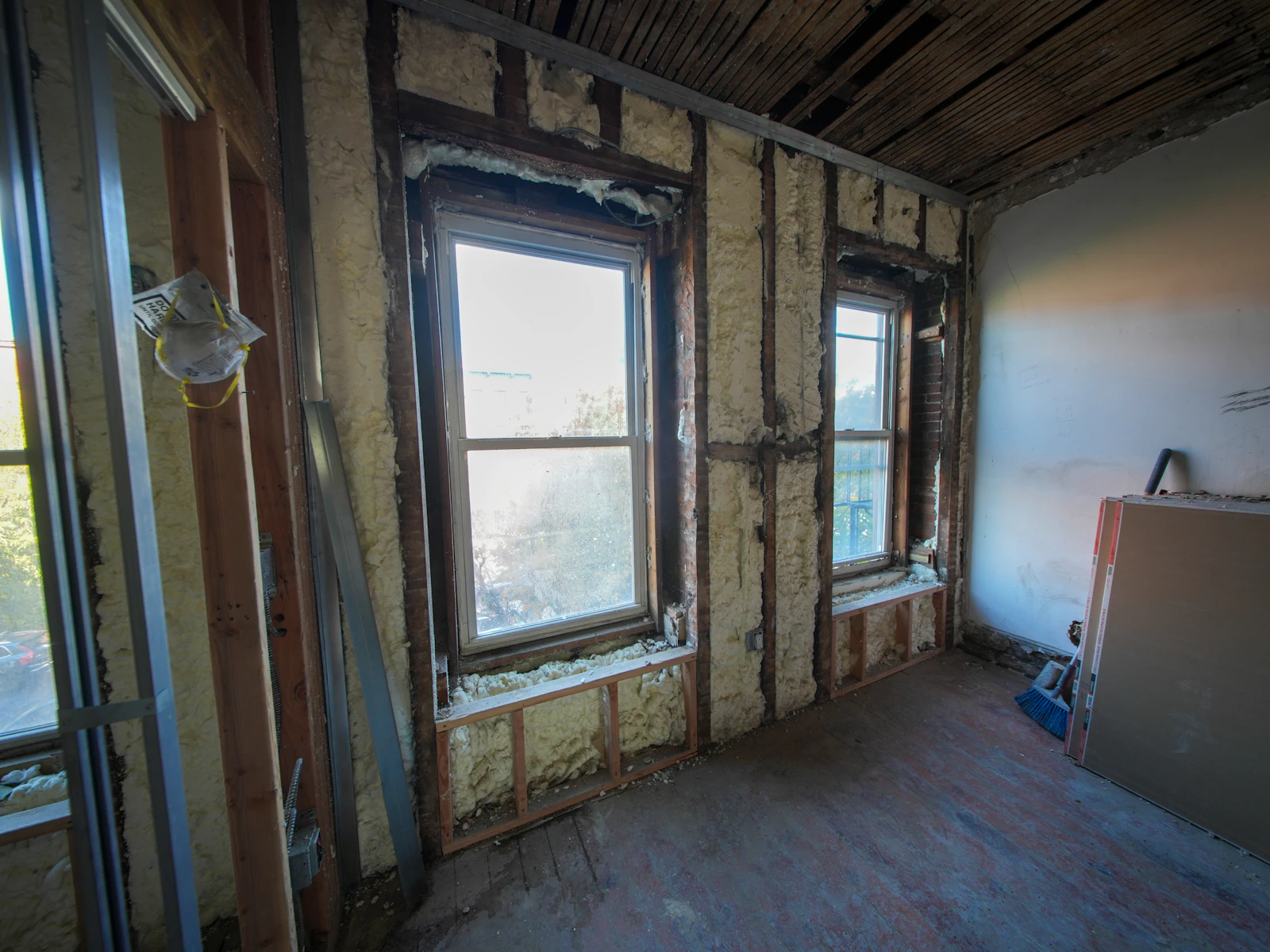
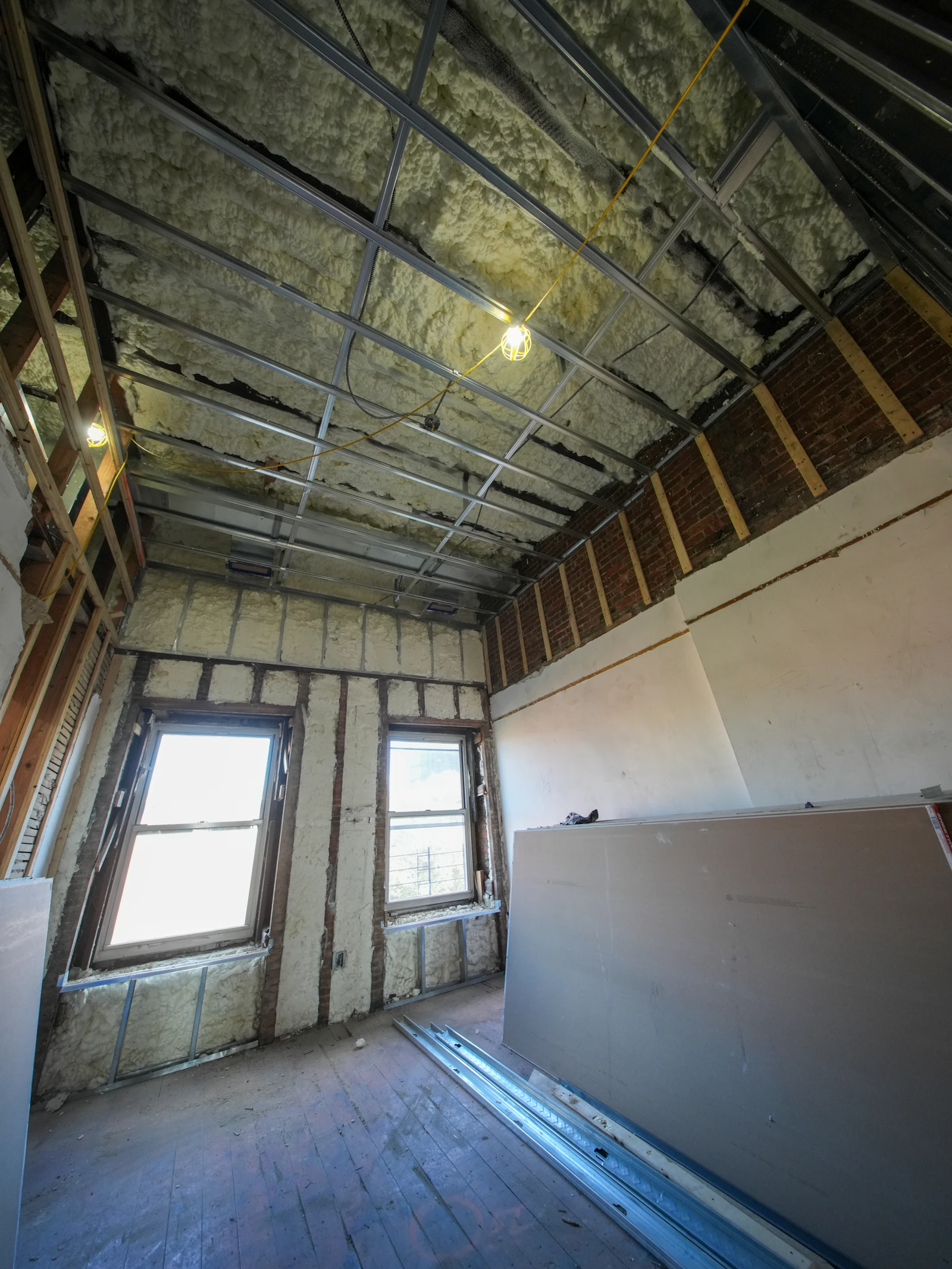
Spray foam does two jobs at once - it insulates and air-seals - and closed-cell delivers roughly R-6 to R-7 per inch, the highest of any common option. Blown-in fiberglass or cellulose insulates only, at lower R per inch, but costs far less per square foot. Foam makes the most sense where space is tight or air-sealing is the goal.
Open-cell foam is lighter, around R-3.5 to R-3.7 per inch, and lets water vapor move through more easily; closed-cell is denser and provides a greater R-value where space is limited. For a straightforward attic-floor top-up, blown-in usually hits the target R-value for less money - foam earns its premium mainly at rooflines, rim joists, and tight spots. See [spray foam vs blown-in](/guides/spray-foam-vs-blown-in/) for the full comparison.
How do the main attic insulation types compare?
Closed-cell spray foam has the highest R-value per inch, followed by cellulose, fiberglass batts, then loose-fill fiberglass. But per-inch R-value is only part of the story - where the material fits, how it's installed, whether it air-seals, and cost all matter.
| Material | R-value per inch | Best use | Notes |
|---|---|---|---|
| Blown-in fiberglass (loose-fill) | R-2.2-R-2.7 | Attic floors, hard-to-reach spots | Lightweight; settles very little |
| Blown-in cellulose (loose-fill) | R-3.2-R-3.8 | Attic floors, retrofits, dense-pack walls | More R per inch; settles ~13% |
| Fiberglass batts (blankets) | R-3.1-R-4.3 | New or open walls, accessible joist bays | Hand-cut; gaps cut performance |
| Open-cell spray foam | R-3.5-R-3.7 | Air-sealing irregular areas and rooflines | Also an air barrier; more vapor-permeable |
| Closed-cell spray foam | R-6.0-R-7.0 | Tight spaces needing max R plus air seal | Highest R per inch; highest cost |
Related questions
Sources
6 cited- Loose-fill fiberglass and cellulose R-value per inch: U.S. Department of Energy, Building America Solution Center, Loose-Fill Insulation (checked 2026-08-19).
- Installation methods, foam types, and recommended R-30 to R-60 attic target: U.S. Department of Energy / ENERGY STAR, Insulation Fact Sheet, DOE/CE-0180, 2008 (checked 2026-08-19).
- Fiberglass batt R-value per inch: Colorado Energy, R-Value Table: Common Building Materials (checked 2026-08-19).
- Open- and closed-cell spray foam R-value per inch: LearnMetrics, Insulation R-Value Chart (checked 2026-08-19).
- Blown-in fiberglass and cellulose cost per square foot: HomeAdvisor, Cost to Install Blown-In Insulation, 2025 (checked 2026-08-19).
- Cellulose settling behavior (~13%): GreenBuildingAdvisor, Blown-in cellulose (settling) (checked 2026-08-19).