
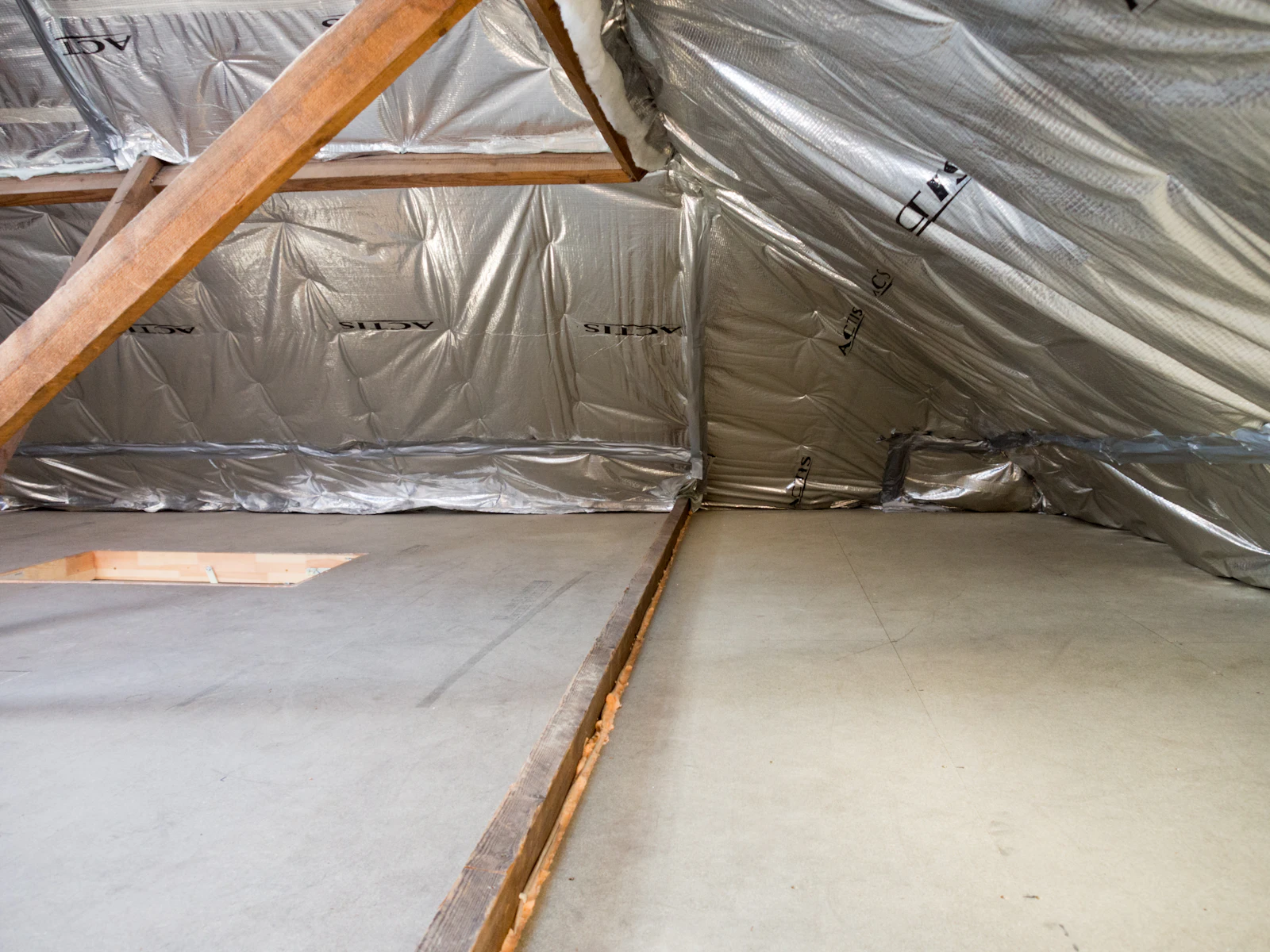
Blown-in insulation has no fixed expiration date. Kept dry and undisturbed, blown fiberglass and cellulose can last the life of the home, because the fibers do not break down on their own - one building-science reference puts most insulation's life expectancy at 100-plus years (GreenBuildingAdvisor). What ends its useful life is outside damage: moisture, which the Department of Energy calls the attic's "number one enemy," plus settling, compression, and pests.
That is why longevity is really about attic conditions, not a countdown. A dry, well-ventilated, undisturbed attic is what buys you those decades.
How does settling affect cellulose and its R-value?
Loose-fill settles as it compresses under its own weight, so crews blow it in thicker than the final target. The Department of Energy says some materials "require a greater initial thickness to offset eventual settling," and a loose-fill product's rated R-value already reflects its settled density. Because settled density rises as depth increases, the R-value of loose-fill does not change proportionately with thickness (DOE, Energy Saver). The practical upshot: measure the depth you actually have, not the depth that was installed.
What are the signs blown-in insulation needs topping up or replacing?
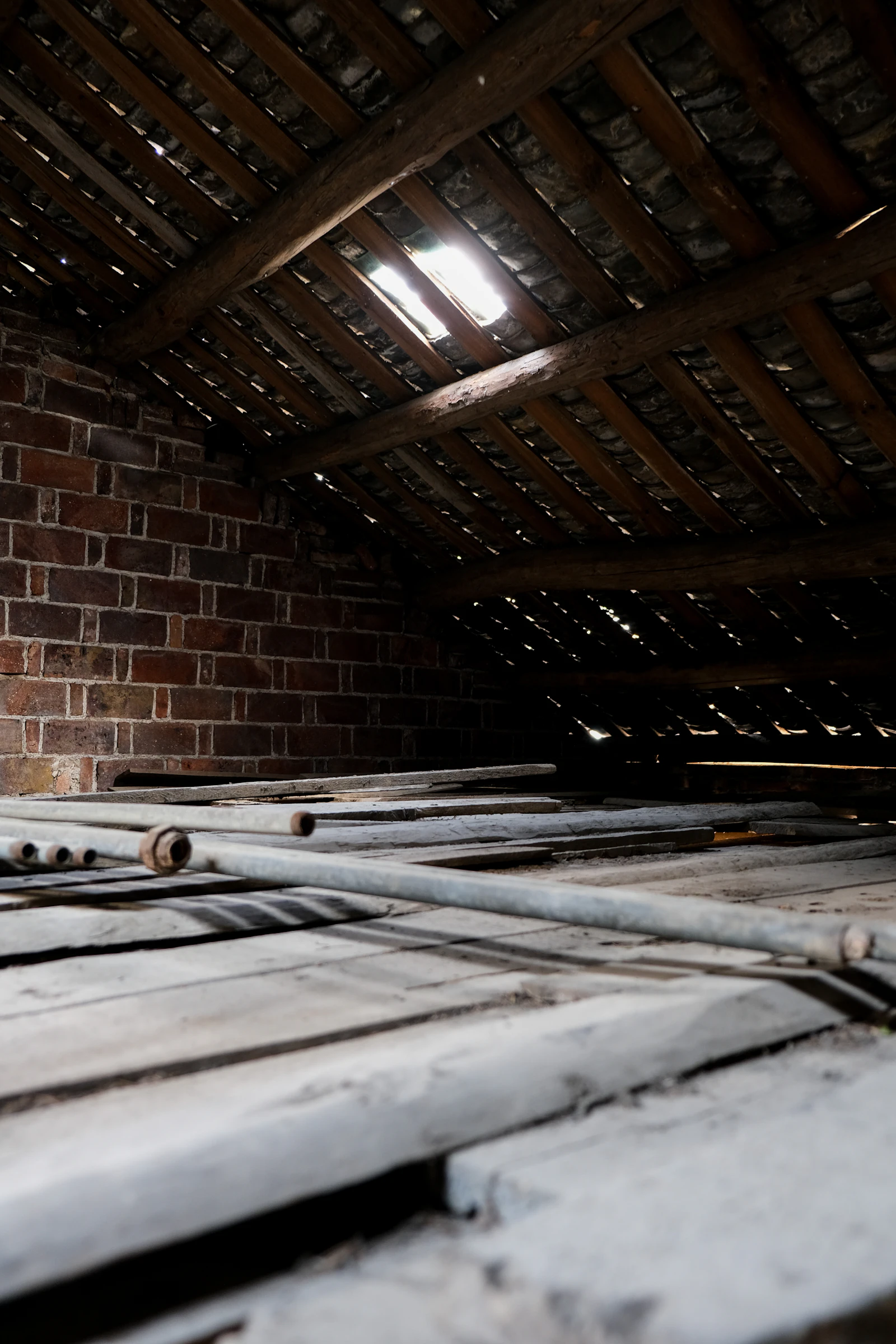
Look for moisture and disturbance. The Department of Energy lists wet insulation - especially near the eaves - plus mold, mildew and rotting wood as signs of water intrusion, and wet insulation loses its value. Also check for insulation packed down below the joist tops, rodent damage, or thin, uneven coverage.
| Sign in the attic | What it means | Typical response |
|---|---|---|
| Wet or matted insulation, mold, musty smell | Water intrusion; moisture can render insulation useless | Fix the leak or ventilation, dry the space, replace affected insulation |
| Insulation packed below the joist tops | Compression or settling has cut the effective R-value | Top up to the recommended depth (about R-38 in most attics) |
| Rodent trails, droppings, tunnels | Pests have displaced or fouled the loose-fill | Address the pests, remove soiled insulation, re-blow |
| Rising bills or uneven room temperatures | Coverage may be thin or below the joists | Measure the depth and add insulation as needed |
How is blown-in insulation installed?
In four broad steps. First, air seal attic penetrations and add rafter baffles so loose-fill stays off the eaves. Next, set depth markers to the target R-value. Then a pneumatic blower feeds shredded cellulose or fiberglass through a hose, and the installer fills evenly over the joists to the settled depth.
Seal and set markers
2- Air seal firstThe EPA recommends sealing attic gaps before insulating; see the DIY vs professional guide for how sealing and safety clearances are handled.
- Add baffles and depth markersRafter baffles keep blown material away from the eaves where it could get wet or dirty, and depth rulers mark the target.
Blow and verify
2- Blow to depthA pneumatic machine blows loose fibers over the attic floor, covering the tops of the joists so heat does not bypass the insulation.
- Verify and clean upCheck the settled depth against the bag's coverage chart, then clear tools and debris.
Related questions
Sources
5 cited- Insulation life expectancy and what actually ends it (moisture, pests, settling, not age): GreenBuildingAdvisor, What is the useful life of insulation, and why? (checked 2026-08-19).
- Moisture as the attic's number-one enemy, and signs of water intrusion: U.S. Department of Energy, Guide to Durable Attics, DOE/EE-0339, 2010 (checked 2026-08-19).
- Settling and R-value-vs-thickness behavior: U.S. Department of Energy, Insulation Fact Sheet, DOE/CE-0180, 2008; DOE Energy Saver, Types of Insulation (checked 2026-08-19).
- R-38 recommendation: ENERGY STAR, Recommended Home Insulation R-Values (checked 2026-08-19).
- Rodent damage to attic insulation: Purdue University Extension, Dealing With Rodents Around Homes and Farms, 2025 (checked 2026-08-19).